

Top Oral Appliance Sleep Apnea Solutions
What is Oral Appliance Therapy?
Oral appliance therapy (OAT) is a treatment for obstructive sleep apnea (OSA) that uses custom-made dental devices to keep the airway open during sleep. OAT is a non-invasive and non-surgical treatment option for sleep apnea.
Oral appliances are designed to reposition the jaw or tongue to open the upper airway, improving airflow and reducing sleep apnea episodes.
According to Dr. Avinesh Bhar, a board-certified sleep doctor at Sliiip.com, an oral appliance, such as a mandibular advancement device (MAD), can be an effective treatment for sleep apnea. This device works by repositioning the jaw to help keep the airway open during sleep. For most people with sleep apnea, a home sleep apnea test is often needed to assess the severity of the condition and determine the best course of treatment.
Mechanism of Action of Oral Appliances
Oral appliances for sleep apnea work by repositioning the lower jaw, tongue, or both to keep the airway open during sleep. This is achieved through various mechanisms, depending on the type of oral appliance used. Mandibular advancement devices (MADs) work by advancing the lower jaw forward, which helps to keep the airway open by preventing the tongue and soft tissues from collapsing into the airway. Tongue retaining devices (TRDs) work by holding the tongue in a forward position, preventing it from falling back and blocking the airway. By keeping the airway open, oral appliances help to reduce the frequency and severity of sleep apnea episodes, improving breathing and overall sleep quality.

Types of Oral Appliances
- Mandibular advancement devices (MADs) are the most common type of oral appliance, which move the lower jaw forward to keep the airway open.

- Mandibular advancement splints are commonly used oral appliances for treating obstructive sleep apnea (OSA). They work by moving the lower jaw forward to improve airflow and reduce airway blockages during sleep.
- Tongue retaining devices (TRDs) hold the tongue in a forward position to prevent it from blocking the airway.
- Mandibular repositioning appliances are commonly used oral devices for treating obstructive sleep apnea (OSA). They advance the lower jaw to create more space for airflow, thereby improving breathing during sleep and reducing snoring.
- Rapid maxillary expansion (RME) devices are used to widen the upper jaw and increase the size of the airway.

Customization and Fitting Process
Oral appliances for sleep apnea are custom-made to fit each individual’s mouth and teeth. The customization and fitting process typically involves several steps. First, a dentist or orthodontist will take impressions of the patient’s teeth and create a model of their mouth. The oral appliance is then designed and fabricated based on this model, taking into account the patient’s specific needs and anatomy. The appliance is then fitted to the patient’s mouth, and adjustments are made as needed to ensure a comfortable and secure fit. The fitting process may involve several appointments to ensure that the appliance is properly adjusted and that the patient is comfortable using it.
Benefits of Oral Appliance Therapy for Sleep Apnea
- Oral appliance therapy can be an effective treatment for mild sleep apnea and moderate sleep apnea.
- OAT can reduce sleep apnea episodes and improve sleep quality.
- Oral appliances are often more comfortable and easier to use than continuous positive airway pressure (CPAP) therapy.
- OAT can be a good option for people who cannot tolerate CPAP therapy or prefer a different treatment.
Here is a video showing what your brain looks like with sleep apnea and WITHOUT sleep apnea.
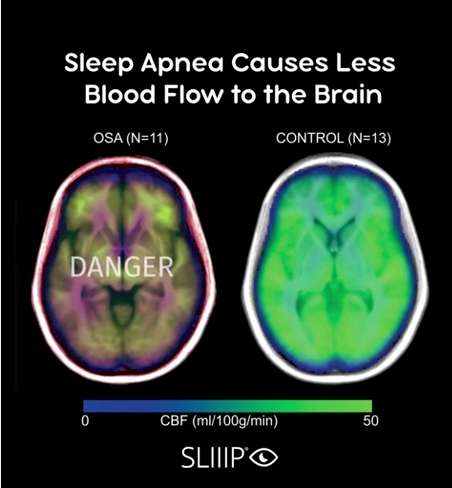
Given these risks, it’s essential to seek medical attention if you suspect you have sleep apnea. Proper diagnosis and treatment can help alleviate symptoms and reduce the risk of these serious complications. it is important to get treatment of a sleep expert so that you can manage your sleep apnea symptoms.
Who Can Benefit from Oral Appliance Therapy?
- People with mild to moderate obstructive sleep apnea (OSA) may benefit from sleep apnea oral appliances.
- Those who cannot tolerate CPAP therapy or prefer a different treatment may also benefit from OAT.
- Oral appliance therapy may be a good option for people with severe sleep apnea who cannot tolerate CPAP therapy.
Risks and Side Effects of Oral Appliance Therapy
- Oral appliance therapy may cause side effects such as jaw pain or discomfort.
- Long-term use of oral appliances can lead to changes in the bite or movement of the teeth.
- Oral appliances may not be effective for everyone, and some people may not see much improvement from using a MAD.
Comparison to CPAP Therapy
- Oral appliance therapy and CPAP therapy are both effective treatments for sleep apnea.
- CPAP therapy is often more effective for severe sleep apnea, while a mandibular advancement device may be a better option for mild to moderate sleep apnea.
- Oral appliances are often more comfortable and easier to use than CPAP machines.
Long-term Efficacy and Follow-up
Oral appliances for sleep apnea have been shown to be effective in reducing the frequency and severity of sleep apnea episodes in the long term. Studies have demonstrated that oral appliance therapy can lead to significant improvements in sleep quality, daytime functioning, and overall quality of life. However, long-term efficacy can vary depending on several factors, including the type of oral appliance used, the severity of sleep apnea, and patient compliance. Regular follow-up appointments with a dentist or orthodontist are essential to ensure that the oral appliance remains effective and to make any necessary adjustments.
Setting Up Patients for Success
- A partnership between physicians and qualified dentists is essential for successful oral appliance therapy.
- Patients must be properly fitted for an oral appliance and instructed on how to use it.
- Regular follow-up appointments are necessary to ensure the oral appliance is working effectively.
Impact on Lifestyle and Daily Activities
Oral appliances for sleep apnea can have a significant impact on lifestyle and daily activities. By improving sleep quality and reducing the frequency and severity of sleep apnea episodes, oral appliances can help to increase energy levels, improve concentration and focus, and enhance overall quality of life. Additionally, oral appliances can be more convenient and easier to use than other sleep apnea treatments, such as continuous positive airway pressure (CPAP) therapy. This can make it easier for patients to travel, work, and engage in daily activities without the burden of sleep apnea symptoms.
Patient Satisfaction and Improved Health
- Oral appliance therapy can improve sleep quality and reduce sleep apnea episodes.
- Patients who use oral appliances may experience improved overall health and reduced risk of related complications.
- The tongue stabilizing device (TSD) is an oral appliance that uses suction to keep the tongue in a forward position during sleep, preventing it from obstructing the airway. It can reduce breathing interruptions and is uniquely applicable for individuals with missing teeth or dental misalignments, though some may experience discomfort.
- Studies have shown that patients tend to stick with custom-made oral appliances over both off-the-shelf alternatives and CPAPs.
Technological Advancements in Oral Appliances
Technological advancements have led to the development of more effective and comfortable oral appliances for sleep apnea. Advances in materials and design have enabled the creation of oral appliances that are more durable, adjustable, and customizable. Additionally, the use of digital technology, such as 3D printing, has improved the accuracy and speed of oral appliance fabrication. Furthermore, the development of new oral appliance designs, such as tongue muscle stimulation devices, has expanded the range of treatment options available for sleep apnea patients. These technological advancements have improved the efficacy and comfort of oral appliances, making them a more attractive treatment option for sleep apnea patients.
Medicare Coverage and Reimbursement
- Oral appliances for sleep apnea may be covered by Medicare under certain circumstances.
- Patients should check with their insurance provider to determine coverage and reimbursement options.
Conclusion
Oral appliance therapy is a viable treatment option for sleep apnea, particularly for mild to moderate cases. While OAT has its benefits, it’s essential to weigh the pros and cons and consider individual circumstances before choosing a treatment.
Consult with a sleep doctor at Sliiip.com to find the best treatment for your sleep apnea. Wakeup Energized

